Skip to content

South Shore Exterior Painting: A Complete Homeowner’s Guide
The South Shore has some of the most beautiful homes in Massachusetts. It also has some of the most demanding conditions for exterior paint. Salt air from Nantucket Sound and Massachusetts Bay, freeze-thaw cycles that split caulk and blister paint, pre-1978 housing stock with lead paint considerations, and architectural styles ranging from simple ranch homes to ornate Victorians with detailed millwork: all of it makes this market different from what any national guide describes.
We’ve been painting South Shore homes since 1987. That’s 38 years of Colonials in Braintree, Cape Cods in Duxbury, Victorians in Cohasset, saltboxes in Marshfield, and everything in between. This guide covers what you actually need to know before calling for an estimate: what it costs here, when to do it, what prep really involves, whether your home has lead paint, and how to find a contractor you can trust.
Key Takeaways
- South Shore exterior painting runs $3.00–$6.50/sq ft in 2026; coastal towns like Hingham and Duxbury need repainting every 5–7 years due to salt air
- According to the U.S. EPA, 75% of homes built before 1978 contain lead paint, a fact relevant to most South Shore Colonials and Capes
- Labor makes up 75–85% of any exterior project cost; who you hire matters more than which paint brand you choose (HomeAdvisor, 2025)
- Massachusetts exterior painting has a roughly five-month reliable window: late May through mid-October, with 50°F–85°F the recommended temperature range
- Proper prep (pressure washing, scraping, caulking, priming) is what separates a four-year paint job from a ten-year one
How Much Does Exterior Painting Cost on the South Shore?
In 2025, HomeAdvisor’s exterior painting cost guide reports the national average at $1.50–$4.00 per square foot. Massachusetts runs roughly 20% above that benchmark, putting the 2026 South Shore range at $3.00–$6.50 per square foot for standard wood clapboard siding. Pre-1978 properties requiring EPA RRP-compliant lead paint containment push the range to $4.00–$8.00 per square foot. Most South Shore homeowners invest between $5,500 and $22,500 for a full exterior project, depending on house size and surface condition.
That wide range isn’t vagueness. It’s the difference between a well-maintained 1,500 sq ft ranch and a three-story Victorian with failing caulk and lead paint prep requirements. Total project costs by house size in this market:
| House Size | Typical Total Range (2026) |
| Small (1,000–1,500 sq ft) | $3,500–$9,000 |
| Medium (1,600–2,500 sq ft) | $5,200–$13,500 |
| Large (2,600–3,500 sq ft) | $8,500–$22,500 |
| Estate (4,000+ sq ft) | $18,500–$35,000+ |
Source: South Shore market data, 2026; HomeAdvisor, 2025
Two-story homes add 20–35% to single-story estimates of the same square footage. The reason is simple: equipment, setup, and safety requirements for working at height add significant time and cost. A typical two-story Colonial on the South Shore runs $6,500–$14,500 all-in.
Why is Massachusetts labor so much higher than the national average? As of May 2024, the Bureau of Labor Statistics OEWS data for the Boston-Cambridge-Newton MSA shows Boston-area painters earning a median of $27.31 per hour, with experienced journeymen reaching $43.20 at the top of the scale (Bureau of Labor Statistics / O*NET, 2024). Add insurance, workers’ compensation, and contractor overhead and full crew rates run $40–$170 per hour depending on crew size and project complexity.
And labor is 75–85% of any painting project’s total cost. That one fact changes how you should read a quote. When you compare bids, you’re mostly comparing labor quality, crew experience, and prep thoroughness. Not paint brands.
For a full cost breakdown by siding type, prep variables, and multi-story premiums, see our exterior painting cost guide. If interior painting costs are also on your radar, bundling both projects in the same season typically reduces the total mobilization cost.
In 2025, the NAR/NARI Remodeling Impact Report found that 50% of Realtors recommend painting the home exterior before listing (NAR/NARI Remodeling Impact Report, 2025). A 2024 HomeLight survey reported by Revive Real Estate found homes with strong curb appeal sell for roughly 7% more than comparable homes without it. Whether you’re selling or simply protecting an asset, the investment consistently pays.
How Often Does a South Shore Home Need to Be Repainted?
The honest answer depends heavily on where you live. Coastal South Shore towns (Hingham, Cohasset, Duxbury, Marshfield, Scituate) need exterior repainting every 5–7 years because of salt air and humidity. Inland communities like Braintree, Weymouth, Milton, and Quincy can typically stretch to 7–8 years between exterior paint jobs. That gap is based on 38 years of watching South Shore homes age, and it’s real.
Salt air attacks exterior paint differently than ordinary rain and UV. It causes chalking, fading, and paint film degradation on north-facing and oceanside exposures faster than anything else in the region.
How do you know when it’s time? Here are the signs we watch for after nearly four decades on these homes:
- Chalking: Run your hand across the siding. White powder transferring to your palm means the binder in the paint has broken down and it can no longer protect the surface.
- Cracking or crazing: Fine cracks across the surface signal that the paint film has lost flexibility and moisture is working through.
- Peeling near trim or windows: This almost always means caulk has failed and water is getting behind the paint. It won’t stop on its own.
- Fading past the color you chose: Gradual fading is normal. Once it’s noticeable from the street, you’re past the midpoint of the paint’s useful life.
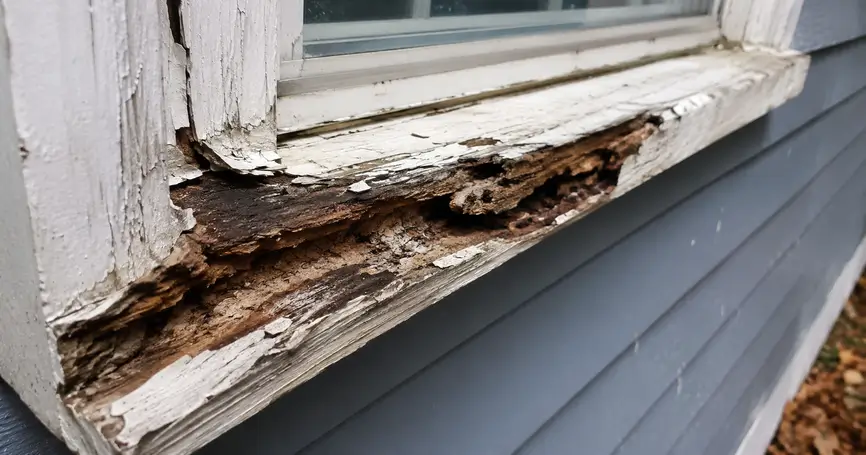
- Soft wood under the surface: Press gently on trim boards and window frames. Any softness means moisture penetration has already started.
For a complete checklist of signs, see When Is It Time to Repaint the Exterior of Your Home?
Wood trim and windows may need attention before the main siding reaches the end of its life, particularly on south- and west-facing exposures. PVC trim boards last considerably longer, sometimes 12+ years before needing paint. If your home has a mix of materials, each section has its own timeline.
When Is the Best Time to Paint a House Exterior in Massachusetts?
In 2025, Benjamin Moore’s exterior paint application guidelines specify 50°F–85°F as the acceptable temperature range, with 60°F–80°F as ideal. Below 50°F, latex paint doesn’t cure properly. Above 90°F, it dries too fast and adhesion suffers. And paint must not be applied if temperatures will drop below freezing within 48–72 hours of application.
In Massachusetts, that functional window runs roughly late May through mid-October. Five months, on a good year. That’s significantly tighter than national guides suggest, and it’s why scheduling exterior work here requires actual planning rather than a casual call whenever the mood strikes.
Spring (May–June): Workable, but high humidity in New England springs can slow drying times significantly. Late May and early June are the sweet spot if temperatures are stable and the forecast is clean. Early May is risky because overnight lows can still dip below 40°F.
Summer (July–August): Peak season. The risk is afternoon heat above 90°F, which causes paint to skin over before underlying layers cure. North-facing elevations in shade paint well; south-facing walls in full afternoon sun need careful timing. Early morning starts help a lot in July.
Fall (September–October): The underrated window. Temperatures moderate, humidity drops, and UV intensity decreases. September through mid-October is often ideal for the South Shore, and it’s when we frequently schedule multi-day colonial projects.
Winter: Standard latex exterior paints need roughly 50°F to apply. Modern cold-weather formulations like Sherwin-Williams Resilience and Benjamin Moore Aura Exterior extend the usable window down to approximately 35°F. But overnight freeze risk within 48–72 hours of application is a hard stop regardless of the product. Most South Shore homes shouldn’t count on exterior painting before late April or after early November.
Want more detail? See our month-by-month breakdown in Best Time to Paint a House Exterior and the temperature-specific guide What Temperature Is Too Cold for Exterior Painting?
What Makes South Shore Homes Different to Paint?
No other painting market in Greater Boston looks quite like the South Shore. The architectural range, from pre-1900 Victorians with ornate millwork to mid-century ranch homes on coastal lots, means each project has its own set of prep requirements, material considerations, and cost profile. A contractor unfamiliar with this area will underestimate the work. The finished job will show it.
Here’s how the major South Shore architectural types differ in practice:
Colonial Homes
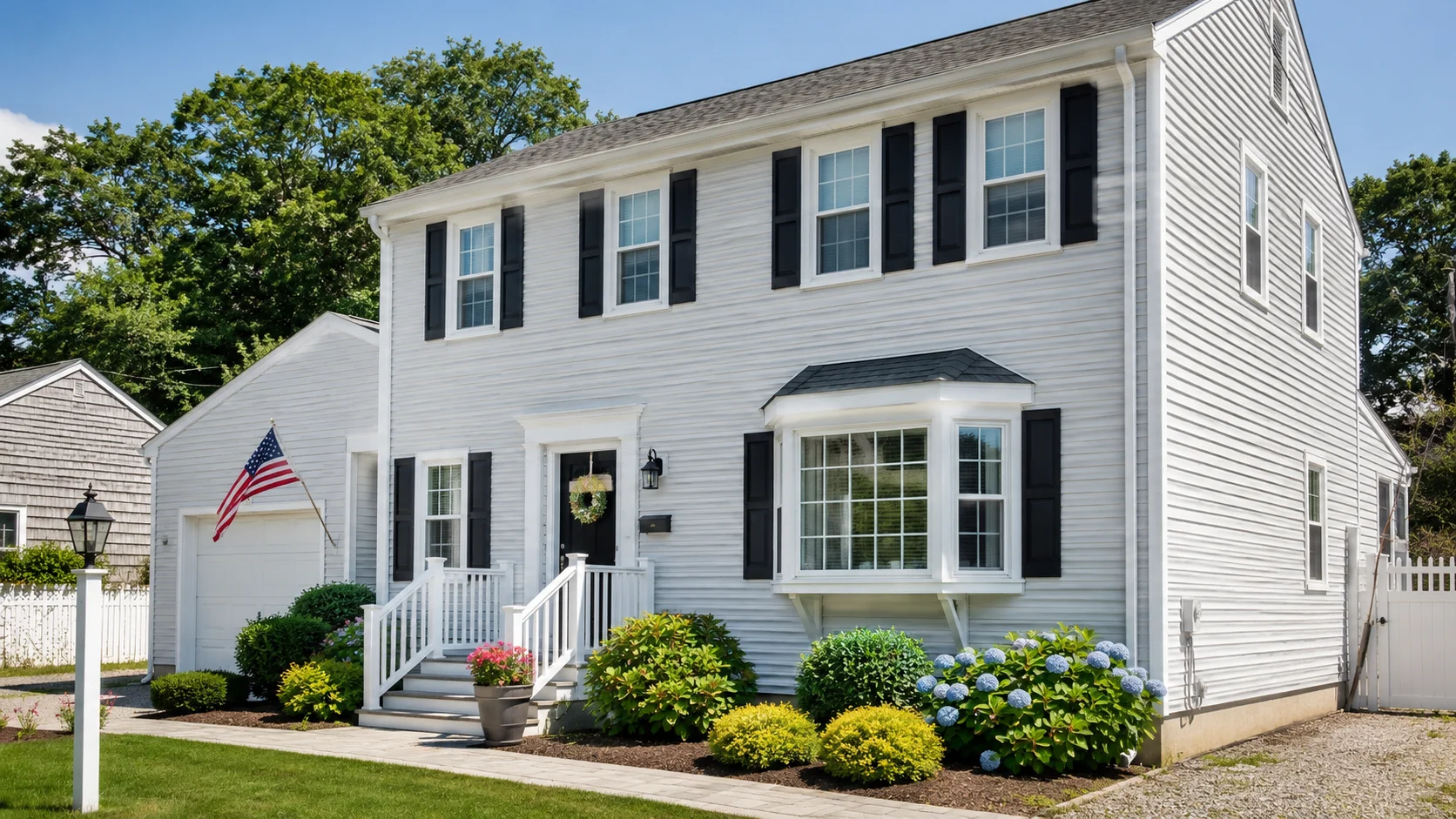
The most common style on the inland South Shore: Braintree, Weymouth, Hingham, Norwood, Canton. Two-story, symmetrical facades, shutters, and often dentil molding or crown trim at the roofline. The two-story premium (20–35%) applies directly, and detailed trim adds painter time beyond what raw square footage implies. Multi-gable Colonials with multiple peak lines require careful brush work on each rake and fascia section that a spray-only crew will shortcut.
Cape Cod Homes
Classic in Duxbury, Marshfield, Plymouth, and the peninsula towns. Low-pitched rooflines, dormers, and often cedar shingle siding rather than painted clapboard. Cedar shingles present a different prep challenge: they absorb primer differently than painted wood, and skipping a penetrating primer coat will shorten paint life significantly. Some homeowners prefer a semi-transparent stain on weathered shingles rather than solid paint. Either choice requires a different product and a different technique from standard clapboard painting.
Victorian and Historic Homes
Concentrated in the older town centers: Hingham Square, Cohasset, parts of Quincy and Milton. Ornate eaves, bracketed porches, decorative window surrounds, and multiple color zones all add significant time. Victorian exteriors typically run $6.00–$8.00 per square foot and require patience and experienced brush work at every detail. A spray-and-roll approach doesn’t do justice to the architecture and often leads to paint lifting from intricate surfaces within a few years.
Coastal Saltboxes and Ranch Homes
Found throughout the waterfront communities: Duxbury, Scituate, Marshfield Beach, Green Harbor. Salt air exposure dominates the conversation regardless of home size or style. Siding chalks faster, window glazing fails sooner, and paint film degrades on north-facing exposures in ways that simply don’t happen five miles inland. Sherwin-Williams and Benjamin Moore both offer marine-grade exterior formulations that are specifically engineered for salt air environments. If your home sits within a mile or two of the ocean, paint selection needs to include salt resistance — not just color.

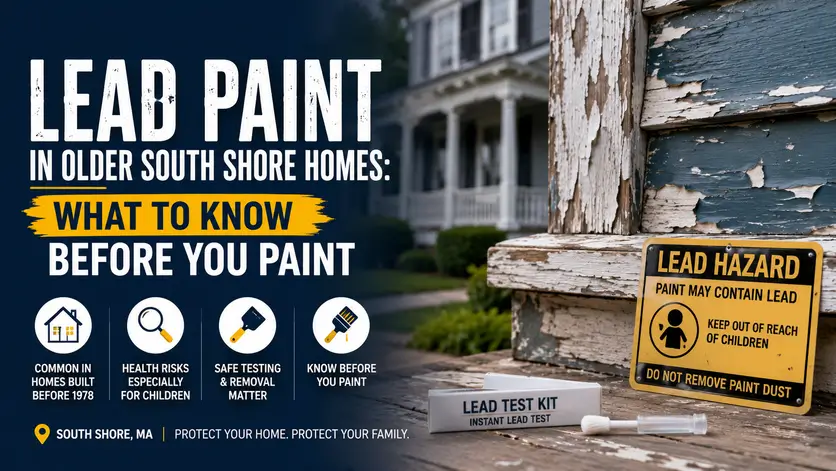
Does My Pre-1978 South Shore Home Have Lead Paint?
According to current U.S. EPA guidance on lead paint, 75% of homes built before 1978 contain lead-based paint. That figure rises to approximately 87% for homes built before 1940. Massachusetts has one of the oldest housing stocks in the country, and the South Shore’s density of Colonials and Victorians built between 1890 and 1960 puts the majority of older homes squarely in this category.
If your home predates 1978, lead paint is a planning reality, not a remote possibility.
What does the EPA’s RRP Rule require of your contractor?
- Certification: Any contractor disturbing more than six square feet of paint on a pre-1978 home must hold EPA RRP certification. Verify the certification number at the EPA’s online contractor lookup before signing any contract.
- Containment: All work areas must be contained to prevent lead dust from spreading. Plastic sheeting on the ground around the house is standard; additional containment is required around windows and doors.
- HEPA vacuuming: All debris must be vacuumed with a HEPA-filter vacuum before containment is removed. Standard shop vacs don’t qualify.
- Documented disposal: Lead-contaminated waste must be bagged, labeled, and disposed of as regulated waste.
This adds to the project cost in a meaningful way. As of 2025, HomeAdvisor reports that full lead encapsulation or abatement work adds $1,478–$5,520 beyond the base painting cost, depending on scope. Proper RRP prep without full abatement typically adds about 30% to the base project.
The red flag to watch for: any contractor who doesn’t mention lead paint on a pre-1978 exterior job, or who quotes dramatically below comparable bids on an older home. There’s usually one explanation. They’re cutting the containment and disposal steps.
Not sure if your home was built before 1978? A licensed lead inspector can test painted surfaces in a few hours for a few hundred dollars. It’s worth knowing before you start any exterior project.
What Does Exterior Painting Prep Actually Involve?
According to HomeAdvisor’s exterior painting cost guide (2025), surface preparation adds $800–$3,300 to a typical exterior project. That range reflects a real difference between a home painted on schedule and one that hasn’t seen a brush in 12 years.
Prep is where exterior paint jobs succeed or fail. A properly prepped surface holds paint for 8–10 years. Skip the prep, and you can see failures in 18–24 months regardless of the paint brand. No product overcomes a compromised substrate.
Here’s the full prep sequence:
1. Pressure washing. Salt air, mildew, chalked old paint, and oxidized debris need to come off before primer goes on. We start every exterior project with a pressure wash, calibrated to the siding type. Cedar shingles need lower PSI than vinyl; brick and stucco require different nozzle angles to avoid forcing moisture into mortar joints. For cost details, see how much pressure washing a house costs in Massachusetts.
2. Hand scraping and sanding. The pressure washer removes most of what’s loose. Hand scraping and sanding catch the rest: feathering paint edges, smoothing rough spots, reaching corners and trim details the sprayer can’t get to.
3. Caulking. Every gap at windows, doors, trim joints, and wall penetrations gets fresh caulk before paint. Failing caulk is how moisture works behind the paint film. It’s also one of the first signs of a poor paint job once it starts failing. We use 50-year paintable siliconized caulk on all joints.
4. Spot priming. Any bare wood, repaired areas, or sections where old paint was scraped back to raw substrate get primed before the topcoat goes on. Skip spot priming and those sections will almost certainly peel first.
5. Full primer coat on bare surfaces. On homes that haven’t been painted in many years, or where significant paint removal was necessary, a full primer coat is required before the finish coats go on. There’s no way around it.
A home painted on schedule spends roughly 15–20% of the project budget on prep. A home that’s been deferred for 10+ years can spend 35–50% on prep alone before a brush touches finish paint. Deferred maintenance is the most reliable way to turn an $8,000 job into a $14,000 job.

How Do You Choose the Right Exterior Painter on the South Shore?
Because labor is 75–85% of any exterior project’s total cost, the contractor you hire is the most consequential decision you’ll make. A lower bid rarely means a better deal if the prep is skipped and the paint fails in three years.
Here’s what to verify before signing anything:
Massachusetts HIC registration. The state requires all home improvement contractors to register with the Office of Consumer Affairs and Business Regulation. Verify any contractor at mass.gov. An unregistered contractor has no recourse process if something goes wrong, and you have limited protection.
EPA RRP certification for pre-1978 homes. If your home was built before 1978, your contractor must be EPA RRP-certified. The certification number is verifiable online at the EPA’s website. This isn’t optional documentation. It’s a legal requirement that protects your family.
Insurance certificates. Request current general liability and workers’ compensation certificates and verify them before work begins. An injury to an uninsured crew member on your property can become your liability.
A site visit before any quote. No contractor can give you a reliable number without walking the job. Surface condition, lead paint status, trim complexity, and caulk failure aren’t visible from the street. Email-only quotes are ballparks, not real project numbers.
Vetting of the painters on the crew. You’re inviting people onto your property. It’s worth asking specifically what process the company uses to screen the painters they send. We take the time to properly vet every painter on our team, a standard we’ve held since 1987, and it matters to the homeowners who trust us.
References in your specific area. A South Shore contractor should be able to name homes they’ve painted in your town. Not a list of general communities, but specific addresses or homeowners you can contact. If they can’t do that, ask why.
Red flags worth knowing: a quote dramatically below comparable bids on a project with real complexity, no mention of lead paint on a pre-1978 home, reluctance to provide an insurance certificate, and pressure to sign before you’ve had time to verify credentials.
To understand how contractors estimate exterior painting jobs before you call anyone, we’ve broken down the full quoting process. For our own 38-year history of serving the South Shore, see about our team and credentials. And to read what South Shore homeowners say about working with us, see our reviews and testimonials.
Frequently Asked Questions
How much does it cost to paint a 2,000 sq ft house exterior in South Shore, MA?
Most 2,000 sq ft South Shore homes fall in the $5,500–$13,500 range for a full exterior project in 2026, walls, trim, and shutters included. The final number depends on siding type, home condition, whether the home is two stories (which adds 20–35%), and whether lead paint containment is required. A site visit is the only way to get a reliable quote; square footage alone doesn’t account for the variables that drive most of the cost.
What exterior paint colors work best for South Shore homes?
Classic New England palettes hold up best at resale and suit the architecture: white with black or navy shutters, historic grays, deep blues and greens that reference the coastline. Before you commit to any color, we paint actual samples directly on your walls so you can see exactly how the color reads in your home’s natural light at different times of day. It’s a step that reliably prevents costly repaints. For region-specific color ideas, see our exterior color guide for South Shore homes.
How long does exterior paint last in Massachusetts?
With quality prep and premium paint, exterior paint should last 7–10 years under normal conditions. Coastal South Shore locations typically reduce that to 5–7 years because of salt air. Builder-grade paint or skipped prep can mean failures in 3–4 years regardless of location. Sherwin-Williams and Benjamin Moore both target 7–10 years with their premium exterior lines under proper application and prep conditions.
Does pressure washing damage my siding?
Not when a professional calibrates the settings for each material. Cedar shingles need lower PSI than vinyl; brick and masonry require different nozzle angles to avoid forcing moisture into mortar joints; painted wood needs a consistent standoff distance to avoid lifting the existing paint film. The technique is the variable. For details on cost and process, see our pressure washing cost guide for Massachusetts.
Can exterior painting be done in winter in Massachusetts?
Standard latex exterior paints need roughly 50°F to cure properly. Modern cold-weather formulations like Sherwin-Williams Resilience and Benjamin Moore Aura Exterior extend the workable window down to approximately 35°F, making late October and early April practical in mild years. The hard stop is overnight freeze risk: if temperatures will drop below 32°F within 48–72 hours of application, the job waits. For temperature guidelines specific to New England conditions, see our exterior painting temperature guide.
Ready to get a straight answer on what your exterior project will cost? Call Quality Preferred Painting at 781-356-2050 for a free in-person estimate. We walk every job, give you a clear line-item breakdown, and flag any lead paint considerations upfront before anything is signed.
Quality Preferred Painting has served South Shore and Greater Boston homeowners since 1987. We’re BBB Accredited and hold Angie’s List Super Service Awards for 2019 and 2020. Learn more about our exterior painting services on the South Shore.
Sources
- HomeAdvisor — How Much Does It Cost to Paint the Exterior of a House (retrieved 2026-05-29)
- U.S. EPA — Lead Renovation, Repair and Painting Program (retrieved 2026-05-29)
- Bureau of Labor Statistics / O*NET — Painter Wages, Boston-Cambridge-Newton MSA (May 2024 OEWS, retrieved 2026-05-29)
- NAR/NARI — Remodeling Impact Report (2025, retrieved 2026-05-29)
- Revive Real Estate — How Much Does Exterior Paint Increase Home Value? (2024, retrieved 2026-05-29)
- Benjamin Moore — Exterior Paint Application Guidelines (2025, retrieved 2026-05-29)