Skip to content

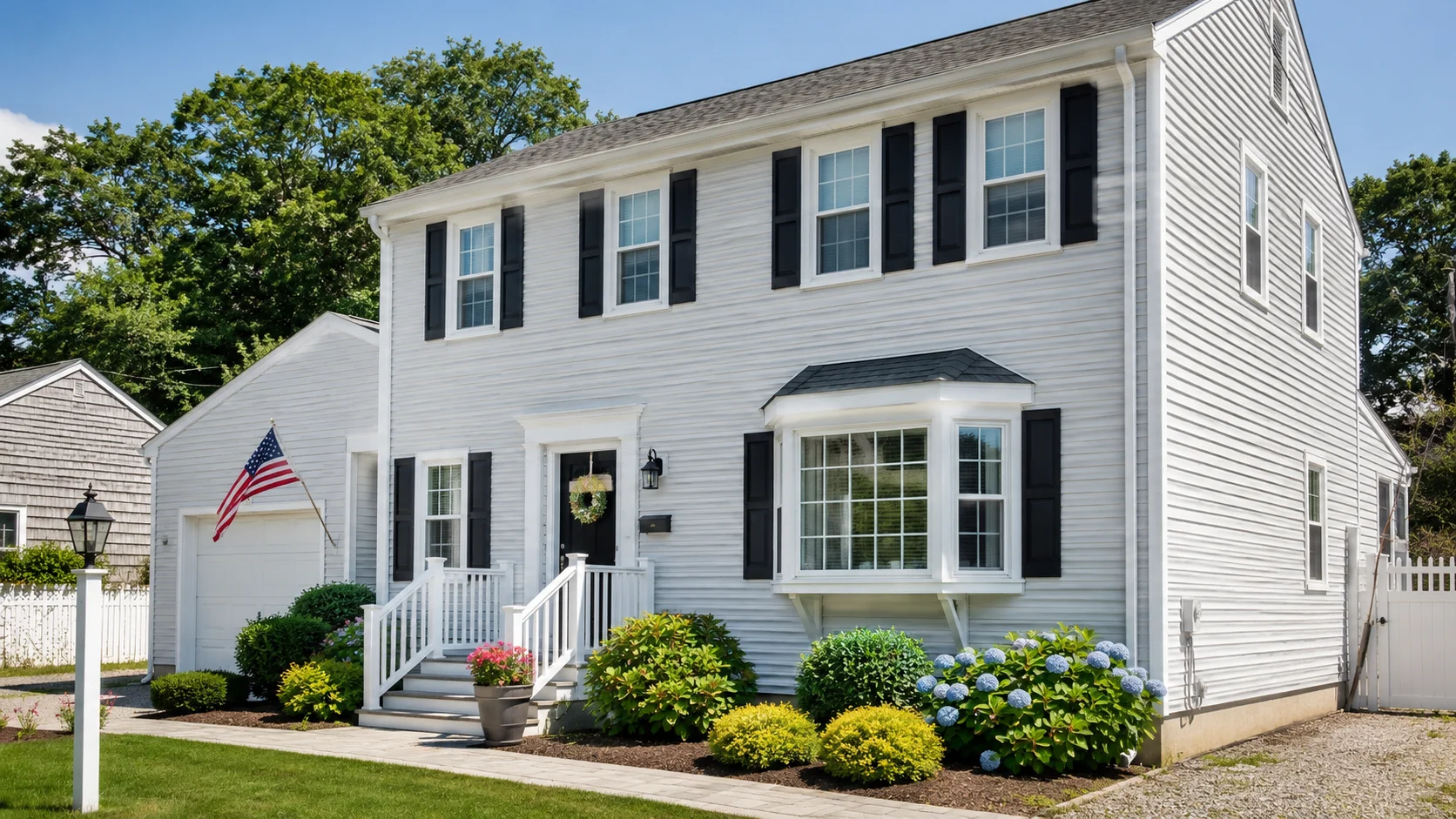
If your home was built before 1978, there’s a good chance lead is hiding under the paint you’re about to disturb. Most homes from that era contain some lead-based paint — and the older the home, the higher the odds. The South Shore’s older housing stock sits right in the high-risk zone. Before you sand, scrape, or hire anyone, here’s what every homeowner in Braintree, Quincy, Milton, and the surrounding towns should understand.
Key Takeaways
- Most homes built before 1978 contain some lead paint, and likelihood rises sharply with age — 87% of pre-1940 homes, 69% from 1940–1960, and 24% from 1960–1978 (EPA).
- Intact lead paint isn’t usually the danger — disturbing it during prep is. Dust is the main exposure route.
- Federal law requires EPA lead-safe certified contractors for most paint-disturbing work in pre-1978 homes.
- Massachusetts has its own disclosure and Lead Law obligations, with updated notification forms as of April 2026.
How do I know if my older home has lead paint?
Lead-based paint was banned for residential use in 1978, so a home’s age is the single best predictor. The EPA reports that 87% of homes built before 1940 contain some lead paint, dropping to 69% for homes built between 1940 and 1960, and 24% for those built from 1960 to 1978 (EPA).
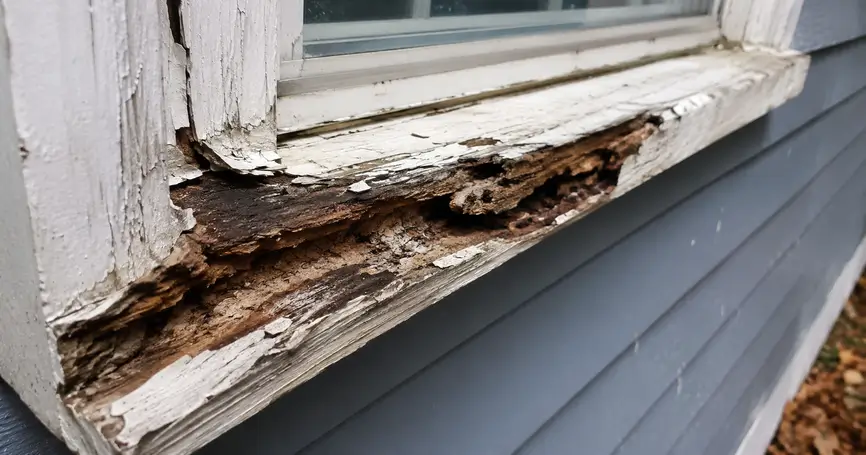
That matters here. Many South Shore homes predate 1940, which puts them in the highest-risk bracket. Lead tends to concentrate on surfaces that take abuse — window sashes, door frames, trim, railings, porches, and exterior siding.

You don’t have to guess. A certified lead inspector or a DIY EPA-recognized test kit can confirm it. If you’d rather skip testing, the safe move is to simply treat any pre-1978 surface as if it contains lead.
Planning exterior work? Our walkthrough on how to paint an exterior house covers the prep steps where lead caution matters most.
Is it dangerous to paint over lead paint?
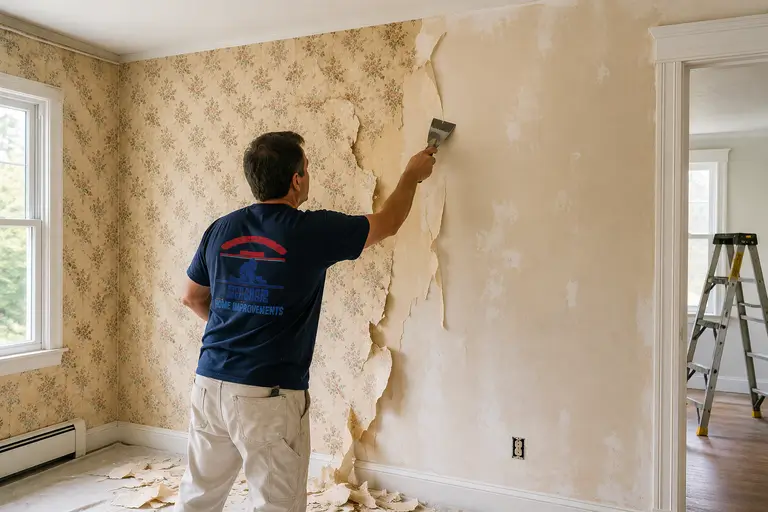
Here’s the part most homeowners get backwards: intact, undisturbed lead paint usually isn’t an immediate hazard. The danger appears the moment you disturb it. Sanding, scraping, and aggressive prep create fine lead dust and chips — and that dust is the primary way children and adults get exposed.

Children under six are the most vulnerable, because even small amounts of lead can affect development. That’s why a quick weekend “I’ll just sand it myself” project is exactly the wrong approach on an older home.
So can you paint over it? Often, yes — through encapsulation, where intact surfaces are sealed with specialized coatings rather than stripped. The key word is intact. Peeling, chipping, or chalking paint has to be stabilized safely first, not painted over and ignored.
Do painters have to be lead-safe certified in Massachusetts?
Yes. Massachusetts property owners should hire lead-safe certified contractors for work in pre-1978 homes (Boston Housing Authority). Under the EPA’s Renovation, Repair and Painting (RRP) Rule, certification is mandatory once work disturbs more than 6 square feet of interior paint per room, or more than 20 square feet of exterior paint (EPA RRP Rule, 40 CFR 745).

That’s a low threshold — most real painting jobs clear it easily. A certified contractor is trained in containment, dust control, and verified cleanup, and is required to follow lead-safe work practices by law.
When you’re vetting companies, ask directly: “Are you EPA lead-safe certified?” If the answer is vague, keep looking. Our guide on how to choose the best painting company in your area walks through the rest of the questions worth asking.
What are the Massachusetts lead paint laws for homeowners?
Massachusetts adds its own layer on top of federal rules. The state requires every owner selling or renting a home built before 1978 to provide a lead paint disclosure before the deal closes — and as of April 2026, Massachusetts updated its Property Transfer and Tenant Lead Law notification forms for clarity (New England Real Estate Academy).
The Massachusetts Lead Law also requires owners to address lead hazards in pre-1978 homes where a child under six lives. Penalties run up to $1,000 per violation under state law, and significantly higher under federal law (LegalClarity).
If you’re a landlord or preparing to sell, this isn’t optional paperwork — it’s a legal obligation tied to the property itself.
How do professionals paint a home with lead paint safely?
Lead-safe painting looks different from a standard repaint. The work is built around one goal: keep lead dust contained and out of the air. That means plastic containment, wet methods instead of dry sanding, HEPA vacuums, and a verified cleanup at the end — not a broom and a shop vac.
In our experience working on pre-1940 homes around Quincy, Milton, and Hingham, the prep is where the real difference shows. Our crews stabilize failing paint with wet-scraping, contain the work area, and clean as they go, rather than sending dust drifting across a yard or living room where kids and pets spend time.
That discipline is also why hiring out beats DIY here. A homeowner with a power sander can create a hazard in an afternoon that’s expensive to clean up properly. There’s a reason we list it among the top reasons to hire professional house painters for older homes.
What does lead-safe painting cost compared to standard painting?
Lead-safe work generally costs more than a standard repaint, because containment, controlled removal, specialized cleanup, and proper disposal all add labor. There’s no single national figure — the added cost depends on how much surface is disturbed and the condition of the existing paint.
Here’s the honest way to think about it: the extra cost of doing it right is small next to the cost of a contaminated home, a failed real estate disclosure, or a child’s lead exposure. Most local “painters near me” articles skip lead entirely. We’d rather tell you the truth and price the safe version, because that’s the version that protects your family and your home’s value.
Frequently Asked Questions
What year was lead paint banned?
Lead-based paint was banned for residential use in the United States in 1978. Any home built before that year may contain lead paint, and the older the home, the higher the likelihood — up to 87% for homes built before 1940 (EPA).
Can I remove lead paint myself?
It’s strongly discouraged. DIY dry-sanding or scraping creates hazardous lead dust that’s hard to clean up safely. Federal law requires EPA lead-safe certified contractors once work disturbs more than 6 square feet of interior paint per room in a pre-1978 home (EPA RRP Rule).
Does encapsulation count as fixing lead paint?
Encapsulation seals intact lead paint with specialized coatings and is a recognized way to manage the hazard. It’s different from abatement, which permanently removes lead. Encapsulation only works on stable, intact surfaces — peeling or chipping paint must be stabilized first.
Do I have to disclose lead paint when selling my home in Massachusetts?
Yes. Massachusetts requires owners selling or renting any pre-1978 home to provide a lead paint disclosure before closing, and the state updated its notification forms in April 2026 (NEREA). Penalties for noncompliance reach $1,000 per violation under state law.
Who do I call for lead-safe painting on the South Shore?
Quality Preferred Painting serves Braintree and the surrounding South Shore and Boston area. We handle older homes with lead-safe prep practices. Call 781-356-2050 or request a free estimate to talk through your project.
The bottom line for older South Shore homes
- Home age is the best predictor of lead — pre-1978, and especially pre-1940, means high risk.
- Don’t disturb old paint yourself; the dust from sanding and scraping is the real danger.
- Hire an EPA lead-safe certified contractor — it’s the law above modest size thresholds.
- Know your Massachusetts disclosure obligations if you’re selling or renting.
Older homes have character worth protecting — and they deserve to be painted safely. If you own a pre-1978 home anywhere on the South Shore, our team can help you do it the right way. Call 781-356-2050 or request your free estimate.
Sources
- EPA, “How can I tell if my home contains lead-based paint?” (87% pre-1940 / 24% 1960–78), retrieved 2026-06-18, https://epa.gov/lead/how-can-i-tell-if-my-home-contains-lead-based-paint
- EPA, “National Survey of Lead-Based Paint in Housing” (69% for 1940–1960), retrieved 2026-06-18, https://www.epa.gov/sites/default/files/documents/r95-003.pdf
- EPA, “Lead Renovation, Repair and Painting Program Rules” (RRP thresholds, 40 CFR 745), retrieved 2026-06-18, https://www.epa.gov/lead/lead-renovation-repair-and-painting-program-rules
- Boston Housing Authority, “Lead Paint Laws (Federal and State),” retrieved 2026-06-18, https://www.bostonhousing.org/en/Section-8-Leased-Housing/Inspections/Lead-Paint-Laws.aspx
- New England Real Estate Academy, “New Updates to Massachusetts Lead Paint Regulations,” retrieved 2026-06-18, https://newenglandrealestateacademy.com/new-updates-to-massachusetts-lead-paint-regulations-what-real-estate-professionals-need-to-know/
- LegalClarity, “What Is the Lead Paint Disclosure Law in Massachusetts?,” retrieved 2026-06-18, https://legalclarity.org/what-is-the-lead-paint-disclosure-law-in-massachusetts/