Skip to content

A single New England year can be brutal on a paint job. Heavy snow and freezing temperatures one season, then intense sun, humidity, and driving rain the next. So how long should your exterior paint actually last out here — and what can you do to stretch it? Here are real numbers and the factors that decide them.
Key Takeaways
- A quality acrylic exterior paint job typically lasts 5–10 years, and many homes go 7–10 years between repaints (Today’s Homeowner; Sherwin-Williams).
- Climate is a leading factor — and New England’s freeze-thaw swings push paint toward the shorter end of that range.
- On the South Shore, coastal salt air can degrade paint up to 5× faster than inland locations (Today’s Homeowner).
- Surface prep and quality paint, not paint brand alone, are what separate a 4-year job from a 10-year one.
How long does exterior paint last in New England?
A well-applied coat of acrylic exterior paint generally lasts 5–10 years (Today’s Homeowner), and Sherwin-Williams puts the typical repaint cycle at every 7–10 years (Sherwin-Williams). Where you land in that range comes down to your siding, your paint, your prep — and your weather.
Material matters too. Wood loses its protective coat soonest, masonry and brick hold paint longest, and properly painted vinyl or aluminum falls in between (Today’s Homeowner). In our region, plan on the shorter end: a New England winter and summer work harder against a finish than a mild climate does.

Curious what a repaint costs before you commit? See our 2026 exterior painting cost guide for Massachusetts for current local ranges.
Why does New England weather shorten paint life?
Climate is one of the biggest factors in how long exterior paint lasts. Strong sun, humidity, salt air, and frequent freeze-thaw cycles all speed up paint deterioration, and harsh temperature swings, heavy snowfall, and storms add to the damage (Today’s Homeowner). New England stacks several of these on top of each other.
Think about what your siding goes through. Freeze-thaw cycles expand and contract the surface repeatedly. UV from summer sun fades and breaks down the binder. Humidity and driving rain push moisture into any gap. Each stress alone is manageable; together, they age paint fast.
Temperature fluctuation is an underrated culprit. When the temperature drops suddenly after a warm day, paint that didn’t cure properly can crack, peel, or bubble. That’s also why when you paint matters — see our guide to the best time of year to paint a house exterior.
Does coastal salt air matter on the South Shore?
Yes — and more than most homeowners expect. Salt air can cause paint to degrade up to five times faster than at inland locations (Today’s Homeowner). For homes near the water in towns like Hingham, Quincy, and Cohasset, that’s a real difference in how often you’ll repaint.

Across our own South Shore jobs, we consistently see coastal-facing homes need attention a year or two sooner than comparable inland homes in Braintree or Canton. Salt is relentless, and the wind that carries it never really takes a season off.
What makes exterior paint last longer?
Surface prep is the answer, and it’s not close. Most early paint failures come from adhesion and moisture problems — the result of skipped prep — rather than the paint itself being bad. A premium can of paint applied over dirty, glossy, or damp siding will still fail early.

Good prep means washing the surface, scraping and sanding failing areas, priming bare wood, and caulking gaps before a brush ever touches the finish coat. Then it’s quality acrylic paint, applied in the right weather, in the right number of coats.
Stain instead of paint? On some surfaces it’s a smart call — we break down the trade-offs in paint vs. stain for your home exterior. And for the full process, see how to paint an exterior house.
What are the signs it’s time to repaint?
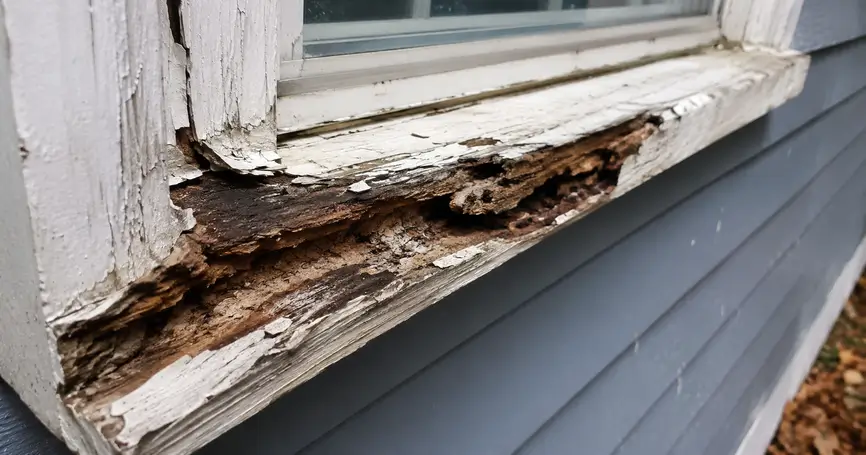
Your house will tell you before the calendar does. Fading, chalky residue on your hand when you touch the siding, peeling, cracking, and any exposed bare wood are all signals the paint is no longer protecting the surface underneath.
Don’t wait for bare wood to spread — that’s when minor repainting turns into carpentry repairs. If you’re seeing early signs, our guide on when it’s time to paint or recoat your exterior helps you decide whether to act now or wait for the right season.
Frequently Asked Questions
How often should I repaint my house in New England?
For most homes, every 5–10 years, and often 7–10 with a quality acrylic paint (Today’s Homeowner; Sherwin-Williams). New England’s climate, and coastal salt air especially, pushes most homes toward the shorter end of that range.
Why does exterior paint fail faster near the ocean?
Salt air can degrade exterior paint up to five times faster than at inland locations (Today’s Homeowner). On the South Shore, we often see coastal-facing homes in towns like Hingham and Cohasset need repainting noticeably sooner than inland ones.
Will a darker color fade faster?
Yes. A dark color on a sun-facing wall may need a fresh coat within 3–5 years, while lighter colors on the same surface can last 5–7 years (Today’s Homeowner). Dark, saturated colors absorb more UV, so in a sun-and-salt climate, color choice affects how long the finish looks fresh.
Is it cheaper to repaint often or do it right once?
Doing it right once almost always wins. Thorough surface prep and a high-quality paint extend a finish’s lifespan and keep a home looking better longer (Sherwin-Williams), while a cheap, low-prep job may fail in a few years — costing more over time in repeated repaints and repairs.
What’s the best time of year to repaint in New England?
Late spring through early fall, when temperatures are moderate and stable, gives paint the best conditions to dry and cure. Sudden temperature drops harm curing. See our guide to the best time to paint a house exterior for the details.
The bottom line on paint lifespan here
- Expect about 5–10 years from a quality acrylic system — often 7–10 with premium paint — and lean toward the lower end in New England.
- Climate is a leading factor; freeze-thaw, sun, and humidity all add up.
- Coastal South Shore homes wear faster — salt air can degrade paint up to 5× faster than inland.
- Prep quality, not just paint brand, decides how long your job actually lasts.
Not sure where your home stands? Quality Preferred Painting offers free exterior assessments across the South Shore and Boston area. Call 781-356-2050 or request your free estimate.
Sources
- Today’s Homeowner, “How Long Does Exterior Paint Last? A Homeowner’s Guide (2026)” (5–10 yr lifespan; salt air up to 5× faster; dark vs. light color 3–5 / 5–7 yrs), retrieved 2026-06-18, https://todayshomeowner.com/painting/guides/exterior-paint-job-lifespan/
- Sherwin-Williams, “How to Paint a House Exterior” (repaint every 7–10 years; prep and quality paint extend lifespan), retrieved 2026-06-18, https://www.sherwin-williams.com/en-us/project-center/paint/exterior-painting-how-tos